Theater Stage with Red Curtains and Spotlights
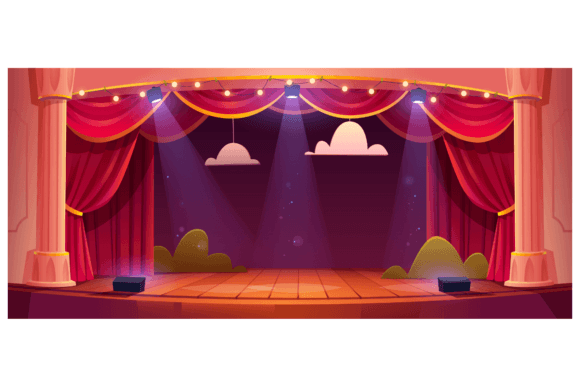
There is a universal language spoken the moment the house lights dim and a single beam cuts through the darkness. That moment is defined by the iconic image of a theater stage with red curtains and spotlights. Whether you are a marketer crafting a brand narrative, an educator designing a lesson plan, or a digital creator building a visual identity, this imagery carries a weight that few other symbols can match. It is not merely a backdrop; it is a psychological trigger for anticipation, drama, and performance. Understanding how to leverage this specific aesthetic—often seen as a vector cartoon illustration of theater interior with empty wooden scene, luxury velvet drapes and decoration with clouds and bushes—can transform how your audience perceives your message.
The Psychology Behind the Velvet Drape
Why does this specific combination of elements resonate so deeply across cultures? The answer lies in centuries of theatrical tradition. The theater stage with red curtains and spotlights serves as a boundary between the mundane world and a space of heightened reality. The red velvet drapes suggest luxury, passion, and importance. They signal that what is about to happen is special, curated, and worth your attention. When these curtains part, they create a frame that focuses the eye immediately on the center of action.
In a modern context, this symbolism translates into user experience design and branding. Just as the stage clears distractions to focus on the performer, your content or product presentation needs a similar focal point. The spotlight acts as a visual guide, telling the viewer exactly where to look. This is why many high-converting landing pages and presentation decks mimic this structure: a clean, empty canvas (the wooden scene) illuminated by a singular, powerful idea (the spotlight), framed by rich, trustworthy aesthetics (the velvet).
Key Visual Characteristics and Strengths
To effectively utilize this motif, one must understand its core components. A classic depiction often features an empty wooden scene, which represents potential and readiness. It is a blank slate waiting for a story. Surrounding this are the luxury velvet drapes, which add texture and depth, preventing the image from feeling sterile. In many creative interpretations, such as a vector cartoon illustration of theater interior, you might also see decorative elements like clouds and bushes floating above or around the stage. These whimsical additions soften the rigidity of the architecture, suggesting imagination and creativity.
The strengths of this visual language include:
- Immediate Recognition: No explanation is needed. Everyone understands the context of a stage.
- Emotional Resonance: It evokes feelings of excitement, nostalgia, and grandeur.
- Visual Hierarchy: The natural contrast between the dark wings, red fabric, and bright light creates an instant hierarchy for information.
- Versatility: It works equally well for serious corporate announcements or playful educational content.
Practical Applications Across Industries
The utility of the theater stage with red curtains and spotlights extends far beyond actual playhouses. For professionals and entrepreneurs, it is a powerful tool for storytelling and engagement.
Marketing and Branding
Marketers use this imagery to launch products with a sense of event. Instead of a standard email blast, a campaign might be framed as "The Grand Opening," utilizing visuals of red curtains parting to reveal the new offering. This elevates the product from a commodity to a star attraction. In digital advertising, a banner featuring a theater stage with red curtains and spotlights can stop the scroll because it promises a show, not just a sale. It suggests that the brand has something significant to unveil.
Education and Training
Educators and trainers can borrow this concept to make learning more engaging. Imagine an online course module that begins with an animation of curtains opening to reveal the lesson topic. This ritual signals to the student that they are entering a dedicated learning space. It helps separate the distraction of daily life from the focus required for education. The empty wooden scene metaphor is particularly useful here, representing the student's mind ready to be filled with knowledge.
Digital Content and Blogging
For bloggers and publishers, this aesthetic offers a cohesive theme for sections highlighting guest posts, interviews, or featured articles. By framing these contributions within a "stage" layout, you honor the contributor and give their work prominence. A vector cartoon illustration of theater interior with empty wooden scene, luxury velvet drapes and decoration with clouds and bushes can serve as a delightful header graphic for a "Featured Author" section, adding personality without overwhelming the text.
Enhancing Engagement Through Design
Implementing these elements correctly can significantly boost usability and engagement. The key is balance. Too much ornamentation can distract, while too little can feel flat. The spotlight effect is crucial for guiding the user's journey. In web design, this translates to using whitespace (the empty wooden scene) effectively and using color contrast (the spotlight) to highlight call-to-action buttons.
When you present information as if it were a performance, you naturally increase the perceived value. Users are more likely to engage with content that feels produced and polished. The presence of luxury velvet drapes in your visual identity implies quality and care. It tells the audience that you have invested time and resources into their experience.
Real-World Use Cases
Consider a tech startup launching a new app. Instead of a generic screenshot, they could create a promotional video where the interface appears on a glowing screen framed by red curtains. Or think of a conference organizer who uses a stage-themed template for all their speaker bios, placing each professional under a virtual spotlight. These small touches build a cohesive narrative that makes the brand memorable.
Strategic Considerations for Implementation
While the appeal of the theater stage with red curtains and spotlights is undeniable, it requires thoughtful execution. Here are practical considerations when selecting or creating assets based on this theme:
- Audience Appropriateness: Ensure the tone matches your brand. A whimsical vector cartoon illustration with clouds and bushes might be perfect for children's education but less suitable for a legal firm. Adjust the level of realism accordingly.
- Accessibility: High contrast is essential. The red curtains and bright spotlights should not compromise readability. Ensure text overlays are legible against busy textures like velvet.
- Cultural Context: While widely recognized, always consider if the "stage" metaphor aligns with your specific cultural audience. In most Western contexts, it is positive, but nuances exist globally.
- Consistency: If you adopt this visual language, maintain it across all touchpoints. Mixing a cartoon style with hyper-realistic photography can create cognitive dissonance.
Final Thoughts on Staging Your Message
The power of the theater stage with red curtains and spotlights lies in its ability to transform the ordinary into the extraordinary. It is a reminder that every interaction, whether a sales pitch, a classroom lecture, or a blog post, is a performance. By adopting the principles of this timeless setting—focus, framing, and dramatic lighting—you can command attention and deliver your message with impact. Whether you are designing a website, planning a presentation, or crafting a brand story, remember that the world is your stage, and your audience is waiting for the curtain to rise.